In the core transportation process of industrial production, complex working conditions such as material erosion, medium corrosion, high temperature and high pressure have always been the “old and difficult” problems that restrict the efficient operation of enterprises. Ordinary metal or plastic pipes often experience problems such as wear, leakage, corrosion, deformation, blockage, and scaling during long-term use. This not only requires frequent shutdown and replacement, increasing maintenance costs, but also may lead to safety risks such as material leakage and equipment damage, becoming a “hidden danger” on the production line. The emergence of silicon carbide wear-resistant pipes, with its unique material advantages, provides a new solution for industrial transportation and has become a favored “hardcore protector” in various industries.
Silicon carbide itself is an outstanding inorganic non-metallic material with extremely high hardness, second only to diamond. It also has stable chemical properties and is not easily reactive with corrosive media such as acid and alkali. Relying on advanced molding and composite processes, silicon carbide wear-resistant pipes fully utilize the advantages of this material – the inner wall is smooth and dense, which can resist the high-speed erosion of hard materials such as ore slurry, fly ash, and metallurgical waste, reduce wear and tear, and withstand the erosion of various corrosive media in the chemical industry, eliminating the risk of leakage. Whether it is slurry transportation in mining, desulfurization and denitrification material transportation in the power industry, or acid-base solution transportation in the chemical industry, it can adapt to different working conditions and operate stably for a long time.
Compared to traditional pipelines, the advantages of silicon carbide wear-resistant pipelines go far beyond that. Traditional metal pipelines are heavy, cumbersome to install, and prone to oxidation and rusting, which can affect their service life; Ordinary plastic pipes have poor heat resistance and weak impact resistance, making it difficult to adapt to complex industrial environments. Silicon carbide wear-resistant pipelines are not only lighter in weight, easier to transport and install, and reduce construction costs, but also have excellent high temperature and impact resistance. They can maintain structural stability under harsh conditions such as alternating high and low temperatures and severe vibrations, and are not easily deformed or broken. More importantly, its smooth inner wall can reduce material conveying resistance, avoid material accumulation and blockage, ensure the continuous and smooth operation of the conveying system, reduce downtime for maintenance, and indirectly improve the production efficiency of the enterprise.
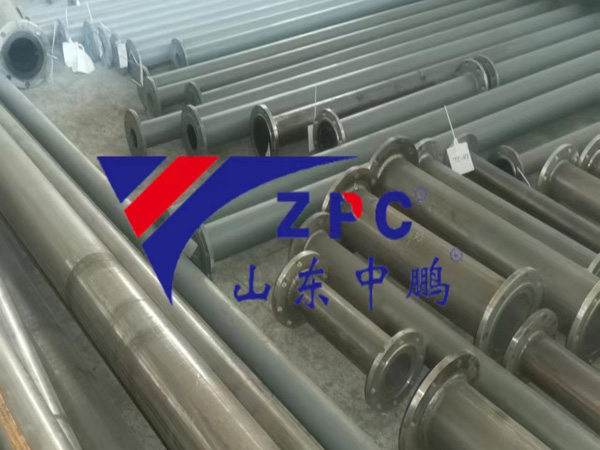
In the current trend of green and low-carbon industrial development, the “long-term durability” characteristic of silicon carbide wear-resistant pipes is more in line with the needs of enterprises to reduce costs and increase efficiency. Its service life far exceeds that of traditional pipelines, which can significantly reduce the frequency of pipeline replacement, decrease raw material consumption and waste generation, while reducing manpower and material investment in the maintenance process, saving operation and maintenance costs for enterprises and helping to achieve green production. From mining to electricity, from chemical industry to metallurgy, silicon carbide wear-resistant pipelines are gradually replacing traditional pipelines and becoming the core choice for industrial transportation upgrading and transformation, laying a solid defense line for production safety in various industries and injecting strong impetus into the high-quality development of modern industry.
Post time: Nov-28-2025