In industrial production, wear and tear is the “invisible killer” of equipment lifespan, affecting everything from mechanical moving parts to components operating under high temperatures. Silicon carbide, the “hardcore player” in the material world, is providing “protective armor” for various equipment with its inherent wear-resistant advantage, becoming a key choice for solving industrial wear and tear problems.
The wear resistance of silicon carbide stems from its inherent “hardness gene”. As a material formed by the tight combination of carbon and silicon elements, its Mohs hardness is second only to diamond, enabling it to easily resist scratching and cutting from most hard particles. This hardness is not a fragile “brittleness”, but rather a combination of strong and tough properties derived from a stable crystal structure – the firm bonding between atoms makes it less prone to generating debris during friction, and even under long-term impact loads, it can maintain its shape stability and avoid premature failure.
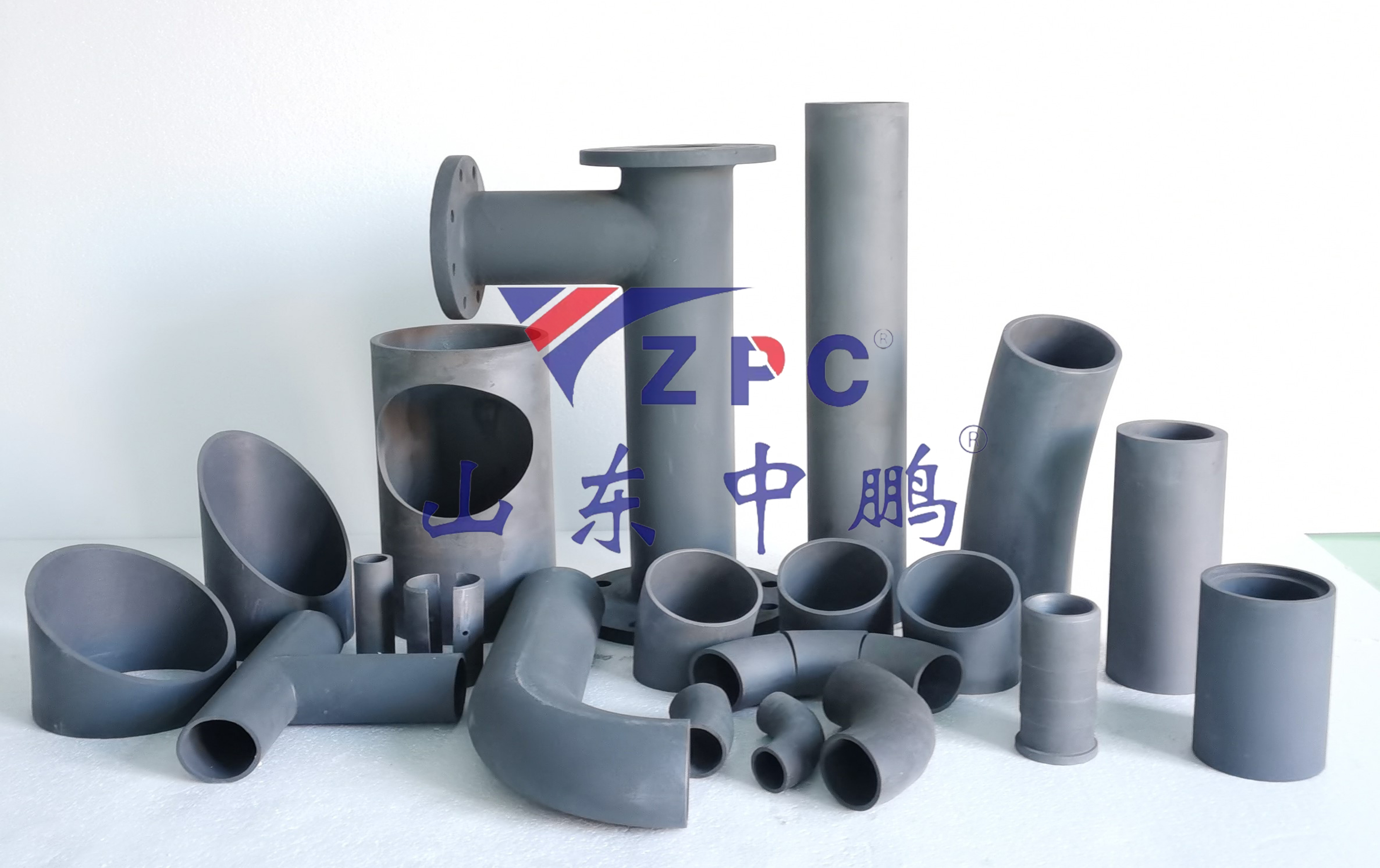
Even more impressively, the wear resistance of silicon carbide can withstand the test of complex environments. In high-temperature scenarios, many materials experience a sharp decline in wear resistance due to softening. However, even in environments with temperatures exceeding a thousand degrees Celsius, silicon carbide maintains high strength and hardness, without experiencing deformation or increased wear. Additionally, it exhibits excellent chemical stability, resisting the erosion of corrosive media such as acids and alkalis. This prevents dual damage from corrosion and wear, providing comprehensive wear protection.
Unlike traditional wear-resistant materials, silicon carbide also possesses a “self-lubricating” property. During the friction process, a dense protective film forms on its surface, akin to a “lubricating coat” worn by the component, effectively reducing frictional resistance and energy loss, while further delaying the rate of wear. This characteristic of being “hard yet not brittle, tough yet wear-resistant” allows it to function stably under various harsh working conditions without requiring complex auxiliary protection.
Today, silicon carbide is widely used in various fields of industrial production, from mechanical seals and conveyor pipes to high-temperature kiln furniture. With its tangible wear-resistant performance, it extends equipment service life and reduces maintenance downtime costs. As the “wear-resistant hard currency” in the industrial field, silicon carbide is leveraging its unique material advantages to ensure efficient production across various industries, and also allowing more people to see the industrial innovation power brought by new materials.
Post time: Jan-26-2026