In scenarios requiring direct exposure to high temperatures, such as industrial production and energy conversion, the heat resistance of materials often determines the stability and efficiency ceiling of equipment. Silicon carbide, the “high-temperature resistant powerhouse” in the semiconductor field, is emerging in various extreme environments, leveraging its innate “heat-resistant constitution”.
Many people are curious about why silicon carbide can remain “as stable as Mount Taishan” under high temperatures. The answer lies in its microscopic structure. Carbon atoms and silicon atoms are tightly bound together by strong covalent bonds, forming a stable lattice structure similar to that of diamond. Just like a building constructed with reinforced concrete, even when exposed to high temperatures, the atoms are difficult to undergo disordered motion, ensuring structural stability from the root.
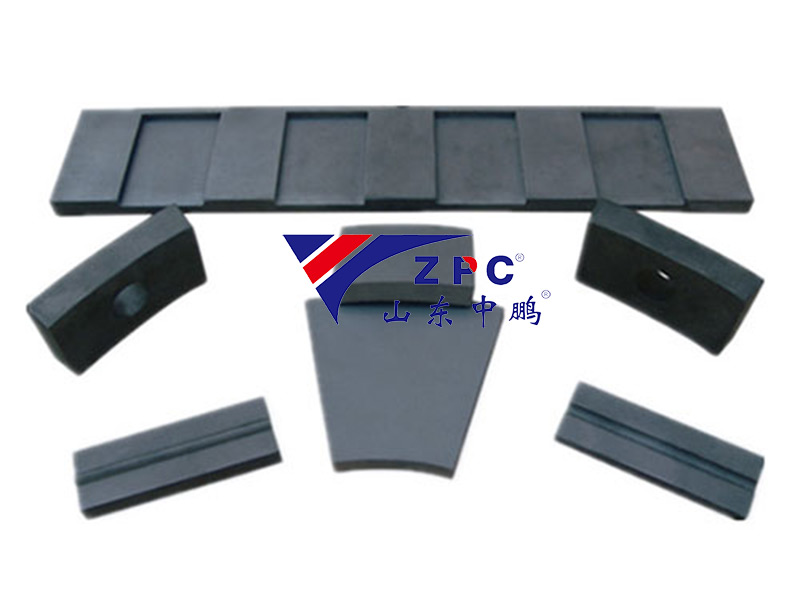
This unique high-temperature resistance characteristic frees silicon carbide from the limitations of ordinary materials. In high-temperature furnaces, it can replace metal components prone to softening for long-term service; in the engine compartments of new energy vehicles, it can maintain stable operation of devices in hot and humid environments without requiring complex cooling systems; in extreme working conditions in aerospace, it can withstand sudden temperature fluctuations, ensuring reliable equipment operation. What’s more, silicon carbide not only resists high temperatures but also possesses excellent electrical conductivity, making energy conversion more efficient in high-temperature environments. This is also a key reason why it has become a core material in fields such as new energy and high-end manufacturing.
From its inherent advantages in microstructure to its stable performance in practical applications, silicon carbide has demonstrated the definition of a “hardcore material” with its strength. As technology continues to mature, this material, capable of “taming” high temperatures, is gradually penetrating into more fields closely related to our lives, providing solid support for efficient energy utilization and high-end equipment upgrades, and ushering in a new era of more “heat-resistant” and reliable material applications.
Post time: Jan-20-2026