In the core track of industrial equipment upgrading and production efficiency improvement, the wear resistance of materials has always been a key factor determining equipment lifespan and operating costs. From the strong erosion caused by mining transportation, to the high corrosion conditions in metallurgy and chemical engineering, and to the high-frequency friction of construction machinery, traditional metal materials often struggle to withstand harsh environments for a long time, resulting in frequent problems such as wear, corrosion, and failure. Silicon carbide ceramics, as a high-performance structural material, are gradually becoming the core solution to solve the pain points of industrial wear resistance due to their excellent wear resistance, providing solid guarantees for the stable operation of equipment in multiple fields.
From the essence of materials, the wear resistance advantage of silicon carbide (SiC) ceramics lies in its unique crystal structure and physical properties. Silicon carbide crystals are mainly bonded by covalent bonds, with tightly and orderly atomic arrangement, forming extremely high hardness and dense internal structure, which is the core foundation of their excellent wear resistance. Unlike metal materials that rely on toughness to resist wear, silicon carbide ceramics, with their high hardness, can directly resist the impact, friction, and cutting of material particles, reducing material loss from the root. This is also the key to their ability to stand out in high wear conditions.
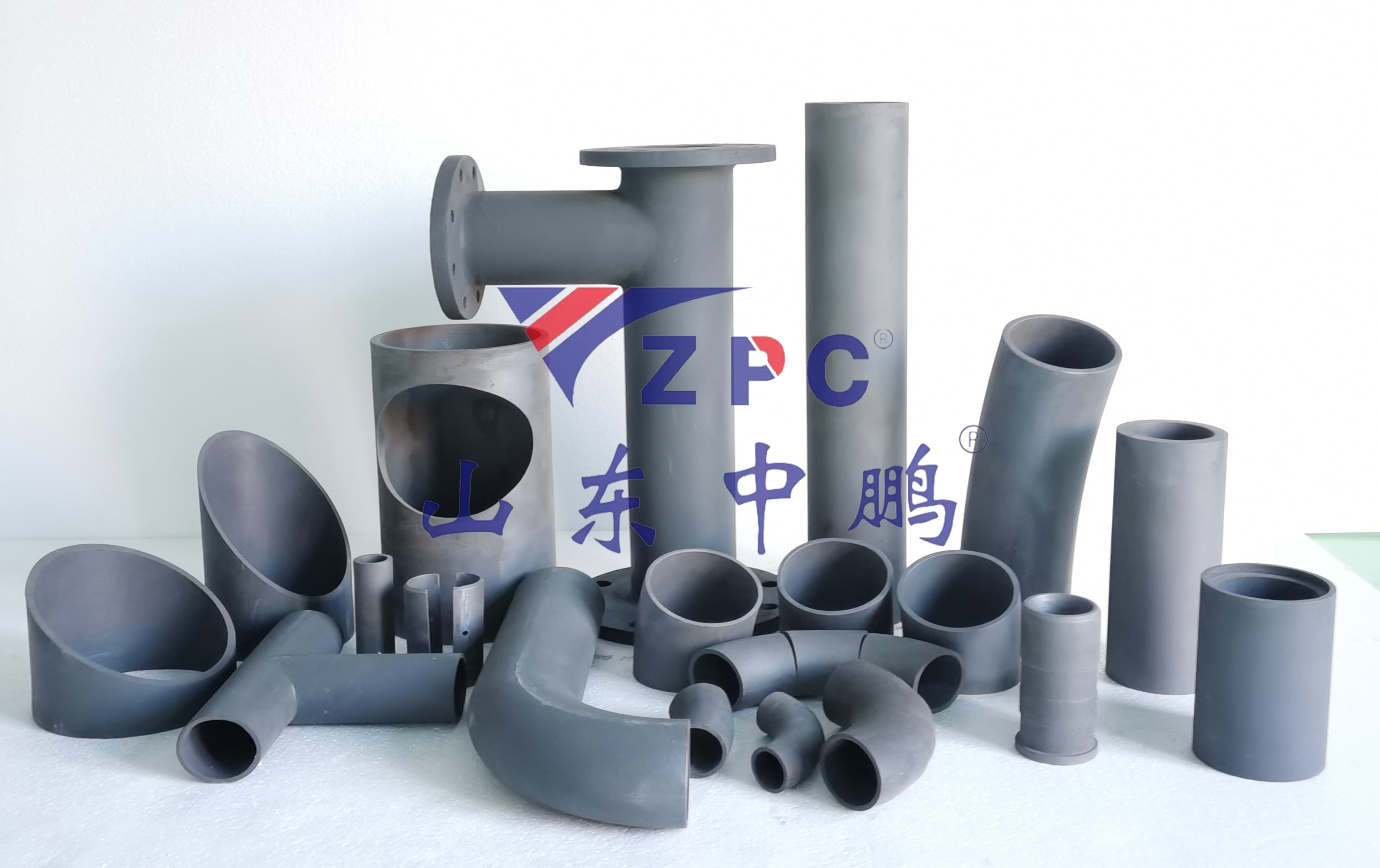
In practical application scenarios, the wear resistance of silicon carbide ceramics exhibits multidimensional adaptability. Faced with high-speed erosion of solid particles in the mining and coal industries, silicon carbide ceramics will not experience surface wear, groove formation, or material peeling due to long-term friction, and can continuously maintain structural integrity to ensure stable operation of conveying, grading, and other equipment; In the corrosive medium environment of metallurgy and chemical industry, it has both wear-resistant properties and excellent chemical stability, and will not cause a decrease in material strength due to corrosion, achieving a dual guarantee of wear resistance and corrosion resistance; Even in high-frequency friction conditions of engineering machinery, pumps, valves, and other components, silicon carbide ceramics can maintain stable friction coefficients and structural strength, prolong equipment replacement cycles, and reduce maintenance costs.
Compared to traditional wear-resistant materials, the wear resistance advantage of silicon carbide ceramics is not outstanding in a single dimension, but rather a combination of long-term durability and reliability. Ordinary metal wear-resistant materials are susceptible to temperature and medium effects, leading to oxidation, softening, or accelerated wear rates. On the other hand, silicon carbide ceramics have excellent thermal stability, maintaining stable hardness and structural properties under high temperature and alternating cold and hot conditions, without the exacerbation of wear caused by thermal deformation; At the same time, its chemical inertness is extremely strong, and it does not react with most acid-base, salt spray and other media, avoiding the superposition of corrosion wear and mechanical wear, further amplifying its wear resistance. This long-lasting wear-resistant characteristic enables silicon carbide ceramics to demonstrate value far beyond traditional materials in reducing equipment maintenance frequency, reducing material loss, and ensuring production continuity.
The demand for wear-resistant materials in the industrial field has long shifted from “temporary substitution” to “long-term adaptation”. Silicon carbide ceramics not only solve the pain points of traditional materials with their excellent wear resistance, but also achieve precise matching with different working conditions through process optimization such as precision molding and high-temperature sintering. Whether it is used to make pipeline linings, wear-resistant components, or as the core protective layer of equipment, the structure and shape can be customized according to the needs, fully exerting its wear resistance properties. This makes silicon carbide ceramics a core material choice for improving equipment reliability, reducing costs, and increasing efficiency in various fields such as mining transportation, metallurgical equipment, engineering machinery, and environmental governance.
As a company dedicated to the research and manufacturing of silicon carbide ceramics, we always take industrial practical working conditions as the guide, deeply cultivate the optimization of wear resistance of silicon carbide ceramics, and strictly control the quality of every link from raw material screening, formula research and development, to forming and sintering, precision processing, to ensure the stability and reliability of product wear resistance. We are well aware that the value of wear-resistant materials ultimately lies in providing practical support for customer production – reducing downtime, lowering replacement costs, and extending equipment lifespan – which is the core significance of wear-resistant materials.
In the future, with the continuous development of industrial technology, the requirements for material performance under harsh working conditions will continue to increase. Silicon carbide ceramics, with their irreplaceable wear-resistant advantages, will undoubtedly expand their application scenarios in more key fields and continue to provide long-term protection for industrial equipment. We will continue to deepen material innovation, continuously optimize the wear resistance and adaptability of silicon carbide ceramics, and provide better products and services to help customers in various industries solve the problem of wear resistance, promoting industrial production towards high efficiency, long-term effectiveness, and green direction steadily.
Post time: Apr-27-2026