In the core process of industrial production, pipelines are like “blood vessels” that support operation. They not only have to withstand the test of high temperature and corrosion, but also deal with the wear and tear caused by material erosion. A slight deviation may affect production efficiency and even cause safety hazards. In recent years, a new type of pipe calledsilicon carbide pipelinehas gradually become popular, and with its unique performance advantages, it has become the preferred solution for many industrial scenarios. Today, in plain language, let me introduce you to this “low-key powerhouse” in the industrial field.
Silicon carbide – an inorganic non-metallic material with hardness second only to diamond, has been formed and sintered through special processes to become an industrial pipeline with multiple advantages. Compared with our common metal pipes and ordinary plastic pipes, its “anti manufacturing” ability is top-notch.
Firstly, it has extremely strong corrosion resistance. In industrial production, it is inevitable to come into contact with corrosive media such as strong acids, strong alkalis, and salt solutions. Ordinary pipelines will soon experience corrosion perforation, which not only requires frequent replacement but may also lead to material leakage. The chemical properties of silicon carbide are extremely stable. Except for a few special media, it can easily resist the corrosion of most acids and alkalis. It is like putting “anti-corrosion armor” on the pipeline, which is as stable as Mount Tai in chemical, electroplating and other strong corrosion scenarios.
Secondly, it has outstanding high-temperature resistance. The fire resistance of silicon carbide pipes far exceeds that of conventional materials, and they can still maintain stable performance at high temperatures, with a long-term temperature resistance of up to 1350 degrees, perfectly adapting to most high-temperature working conditions.
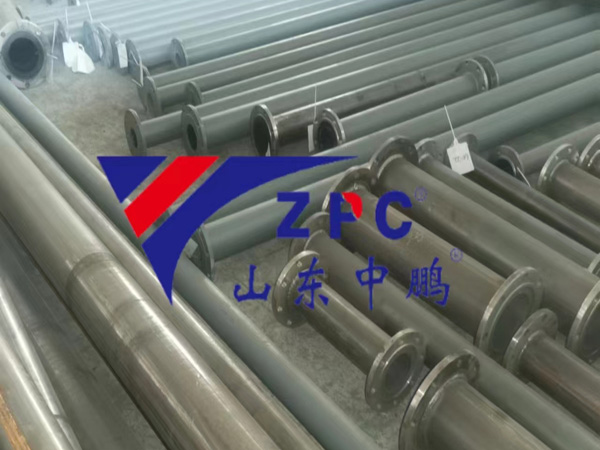
Furthermore, the wear resistance is unparalleled. When transporting materials containing solid particles such as sand and gravel, slurry, etc., the inner wall of the pipeline will continue to be eroded and worn, and traditional pipelines are easily worn thin and damaged. The hardness of silicon carbide pipes is extremely high, and they are almost “unscathed” in the face of long-term erosion of materials. Their service life is significantly extended compared to ordinary metal pipes, which can greatly reduce the trouble and cost caused by frequent replacement of pipes.
In addition, silicon carbide pipes have a hidden advantage: smooth inner walls. This means that the material has less resistance during transportation, which can reduce energy consumption, and is also less prone to scaling, reducing the difficulty of maintenance and cleaning. Although its initial procurement cost is slightly higher than that of ordinary pipelines, its cost-effectiveness advantage is very obvious due to the maintenance costs, replacement costs, and energy savings in long-term use.
Nowadays, with the transformation of industrial production towards green and efficient, the requirements for pipeline materials are becoming increasingly high. Silicon carbide pipes play an important role in various fields such as chemical engineering, new energy, metallurgy, and environmental protection, thanks to their “hard core three tricks” of corrosion resistance, high temperature resistance, and wear resistance, becoming an “invisible hero” in promoting high-quality industrial development. I believe that in the future, this powerful pipe will enter more segmented scenarios and use its technological advantages to safeguard industrial production.
Post time: Dec-11-2025