In industrial scenarios such as mine beneficiation and chemical separation, hydrocyclones are the core equipment for material grading and separation. Inside the hydrocyclone, the continuous erosion from high-speed flowing slurry, corrosive media, and hard particles poses extremely high demands on the durability of the inner wall. Traditional lining materials often face challenges such as rapid wear, easy detachment, and poor corrosion resistance. Frequent replacement not only increases costs but also disrupts the production process. Thesilicon carbide liningfor hydrocyclones, with its outstanding performance, is emerging as an “excellent solution” to address this pain point.
The reason why silicon carbide can become the “outstanding” lining material lies in its inherent material advantages. Its hardness is second only to diamond, and its wear resistance far exceeds that of traditional metals, ordinary ceramics, and other materials. In the face of high-speed ore slurry scouring and particle impact, it can effectively reduce surface wear and tear, fundamentally extending the service life of equipment. What’s more noteworthy is that silicon carbide has strong chemical stability. Except for a few special media, it can easily resist the erosion of acid and alkali solutions and corrosive ore slurry, avoiding problems such as pinholes and leakage caused by corrosion in traditional materials, allowing equipment to operate stably even under harsh working conditions.
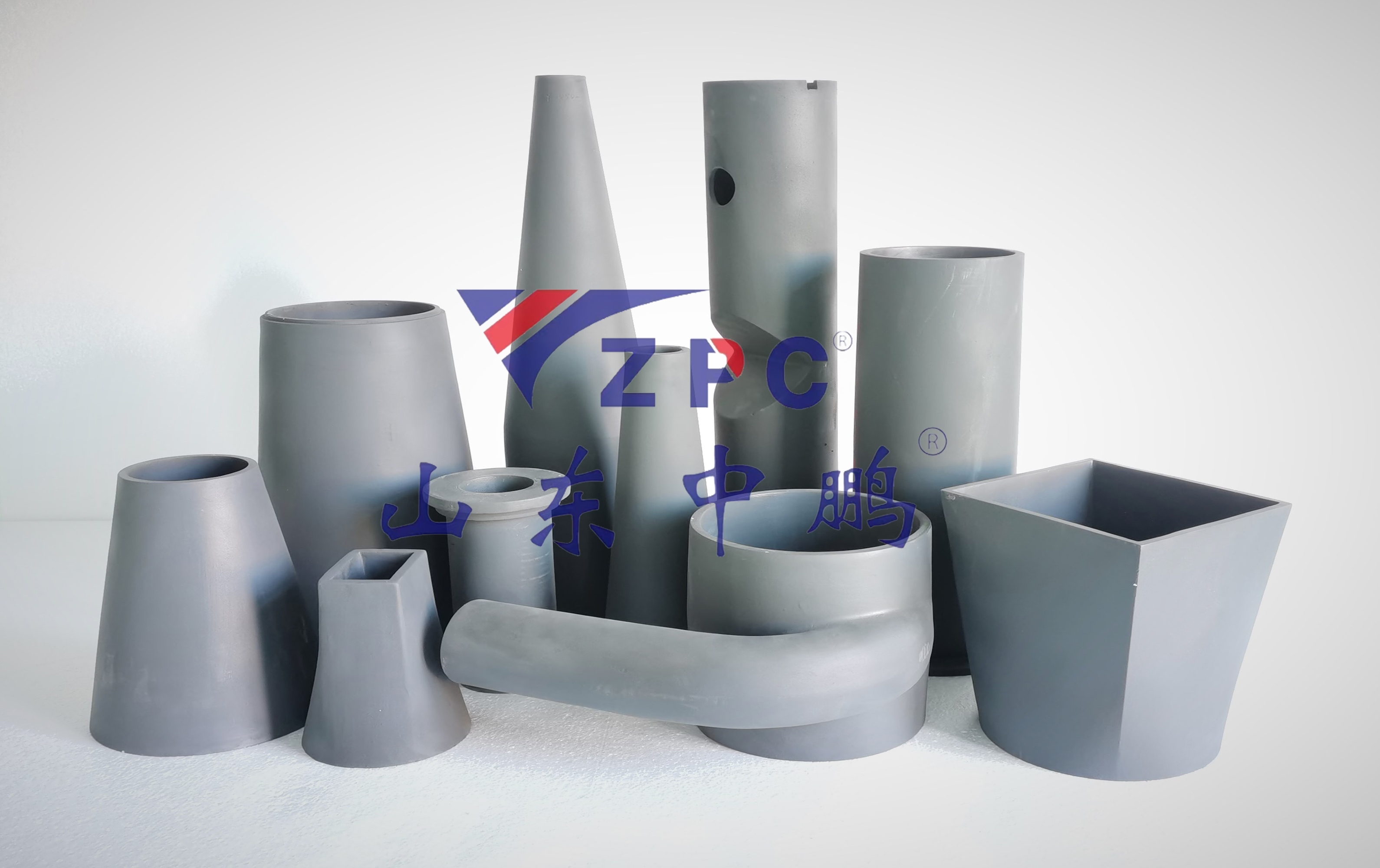
Unlike traditional spliced ceramic liners, high-quality silicon carbide cyclone liners adopt an integral molding process, resulting in a smooth inner wall without gaps or staggered joints. This design not only avoids localized wear caused by particle accumulation in gaps but also ensures smooth material flow, maintaining stable sorting and grading accuracy. Additionally, silicon carbide exhibits excellent thermal stability, preventing cracking and detachment even in high-temperature conditions or environments with sudden temperature changes, further ensuring production continuity.
For enterprises, choosing silicon carbide cyclone liners essentially means opting for a production model that “reduces costs and increases efficiency”. A longer service life translates to fewer downtime for parts replacement, which not only saves on accessory procurement costs but also minimizes capacity losses due to downtime. The stable performance makes the production process more controllable, ensuring better product quality. In today’s industrial manufacturing, which is moving towards efficiency, energy conservation, and sustainability, silicon carbide liners, with their core advantages of wear resistance, corrosion resistance, stability, and longevity, are gradually replacing traditional materials and becoming a crucial choice for upgrading cyclone equipment.
In the future, with the continuous optimization of material technology, silicon carbide lining will play a valuable role in more industrial fields, bringing better user experience to enterprises.
Post time: Jan-10-2026